THE BIODIVERSITY ATLAS – INDIA FIELD GUIDE SERIES
Modern, integrated, multi-platform field guides for biodiversity sciences
Biodiversity Atlas – India Field Guide Series aims to produce modern, authoritative, and multi-platform field guides that are integrated across print, mobile and online media. These Field Guides will assist a budding population of naturalists and citizen scientists in the identification, natural history and biology of species. The overarching goal is to contribute to the growth of biodiversity sciences in India through citizen science initiatives using biodiversity informatics.
India is a land of biodiversity, where watching and photographing animals and plants has now become popular. At the same time, with the rise of citizen science initiatives, amateur naturalists are increasingly interested in generating new publication-quality information on the natural history, species diversity, and biology of many popular groups of organisms, such as butterflies, dragonflies, birds, and plants. In the past decade, amateur naturalists and young scientists have made significant contributions by helping to discover hundreds of new species in India, and contributed to the understanding of distributional ranges, seasonal occurrence and abundance of species by submitting millions of observations to online biodiversity informatics platforms. Massive growth in data generation through citizen science initiatives such as Biodiversity Atlas – India (https://www.bioatlasindia.org), Atlas of Living Australia (https://www.ala.org.au), eBird (https://ebird.org), iNaturalist (https://www.inaturalist.org), and many others shows the tremendous promise of biodiversity informatics through widespread collaborations between professional and amateur citizen scientists.
At the same time, these developments highlight a need to produce modern, authoritative, and integrated multi-platform field guides that can train and assist a growing population of naturalists, citizen scientists and budding professionals in the identification, natural history and biology of species. The proposed Biodiversity Atlas – India Field Guide Series addresses this need. The Field Guides will form an integrated interface between print, mobile and online media, as follows.
The Biodiversity Atlas – India is a collaborative citizen science project (https://www.bioatlasindia.org) in which thousands of individuals from multiple institutions, non-governmental organizations (NGOs) and informal citizen groups are currently involved. It provides a powerful natural history web-platform for species-based bioinformatics. Most data are contributed by amateur citizen scientists, photographers and professional scientists; and the data are peer-reviewed and curated by advanced amateurs and professional biologists. Thus, Biodiversity Atlas – India supports the efforts of integrated professional-amateur scientific communities that aggregate large datasets on Indian biodiversity with the goal of studying ecological trends, especially in the face of climate change and human development. There are currently eight taxon-based websites (i.e., on specific organismal groups): (1) butterflies (est. 2010), (2) moths (est. 2014), (3) dragonflies and damselflies (est. 2014), (4) cicadas (est. 2015), (5) reptiles (est. 2017), (6) amphibians (est. 2017), (7) birds (est. 2017), and (8) mammals (est. 2018) (see further details at https://www.bioatlasindia.org/bai-websites).
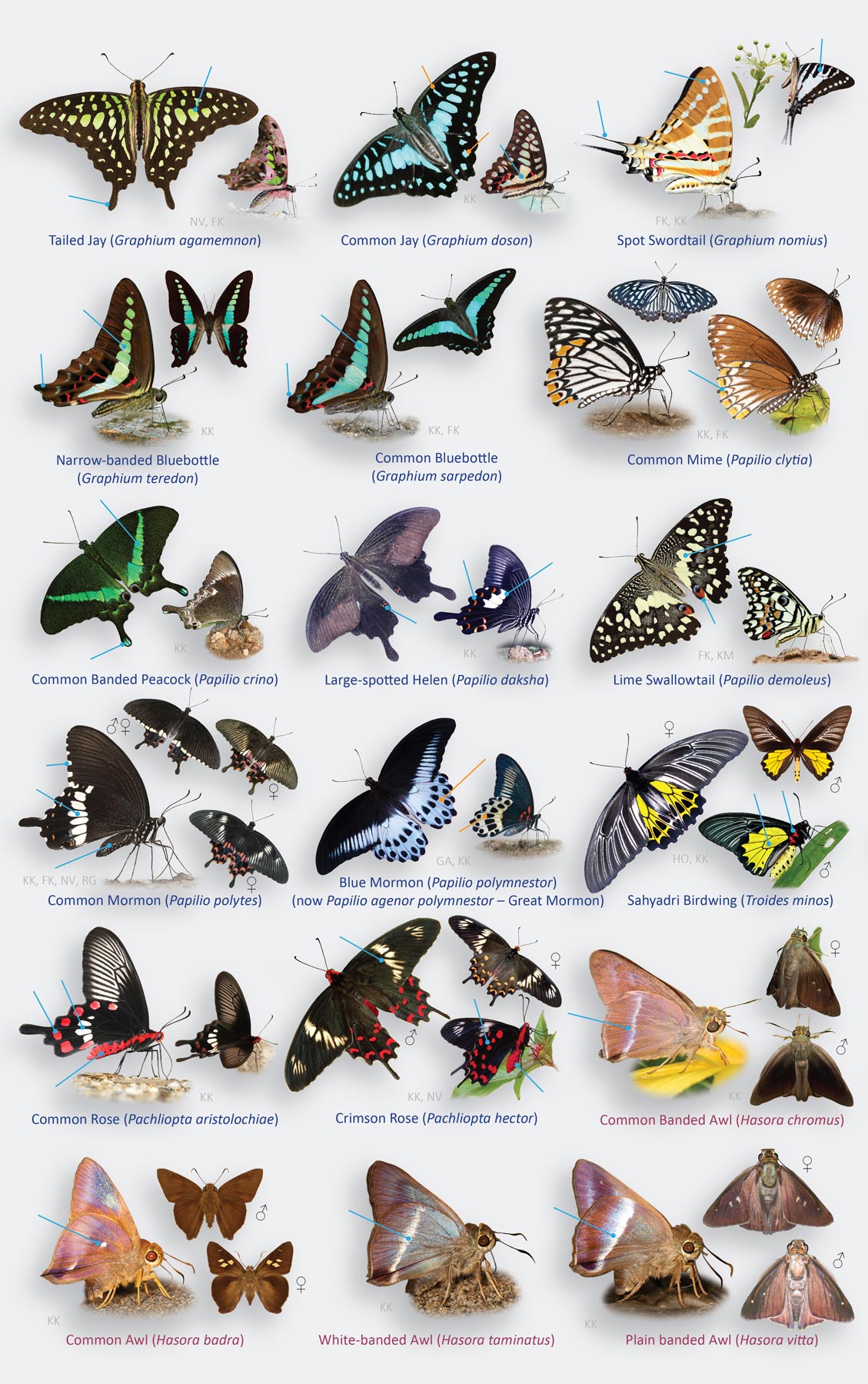
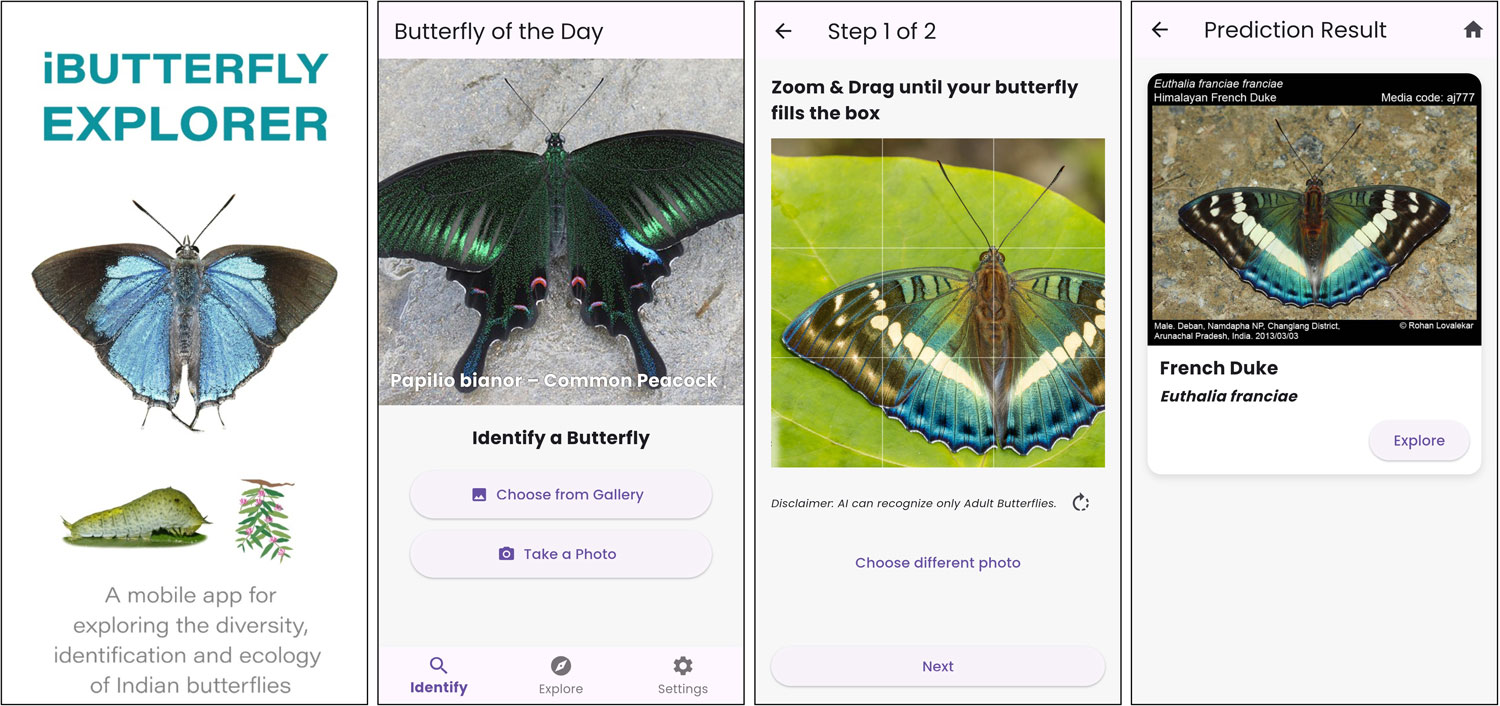
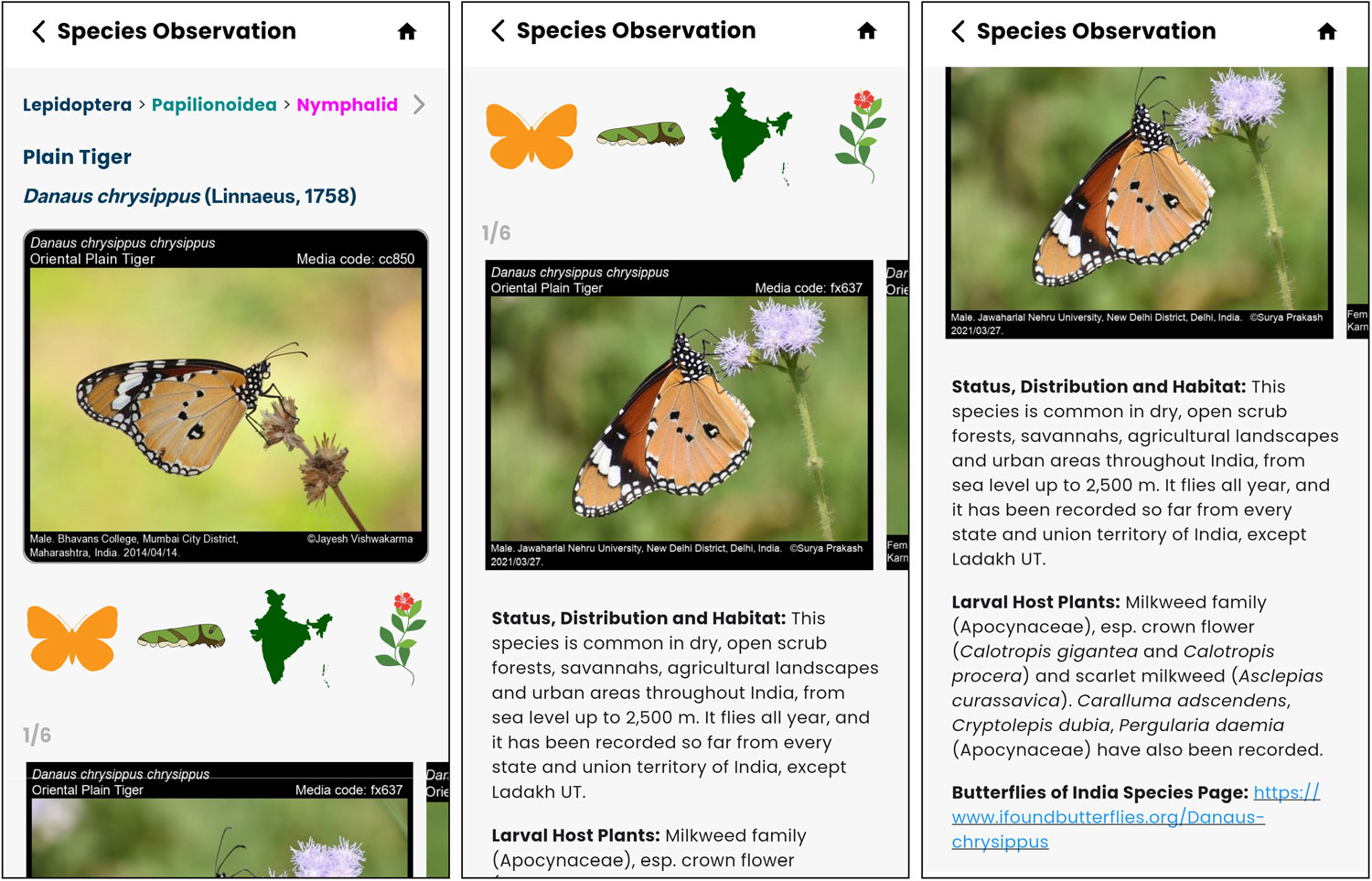
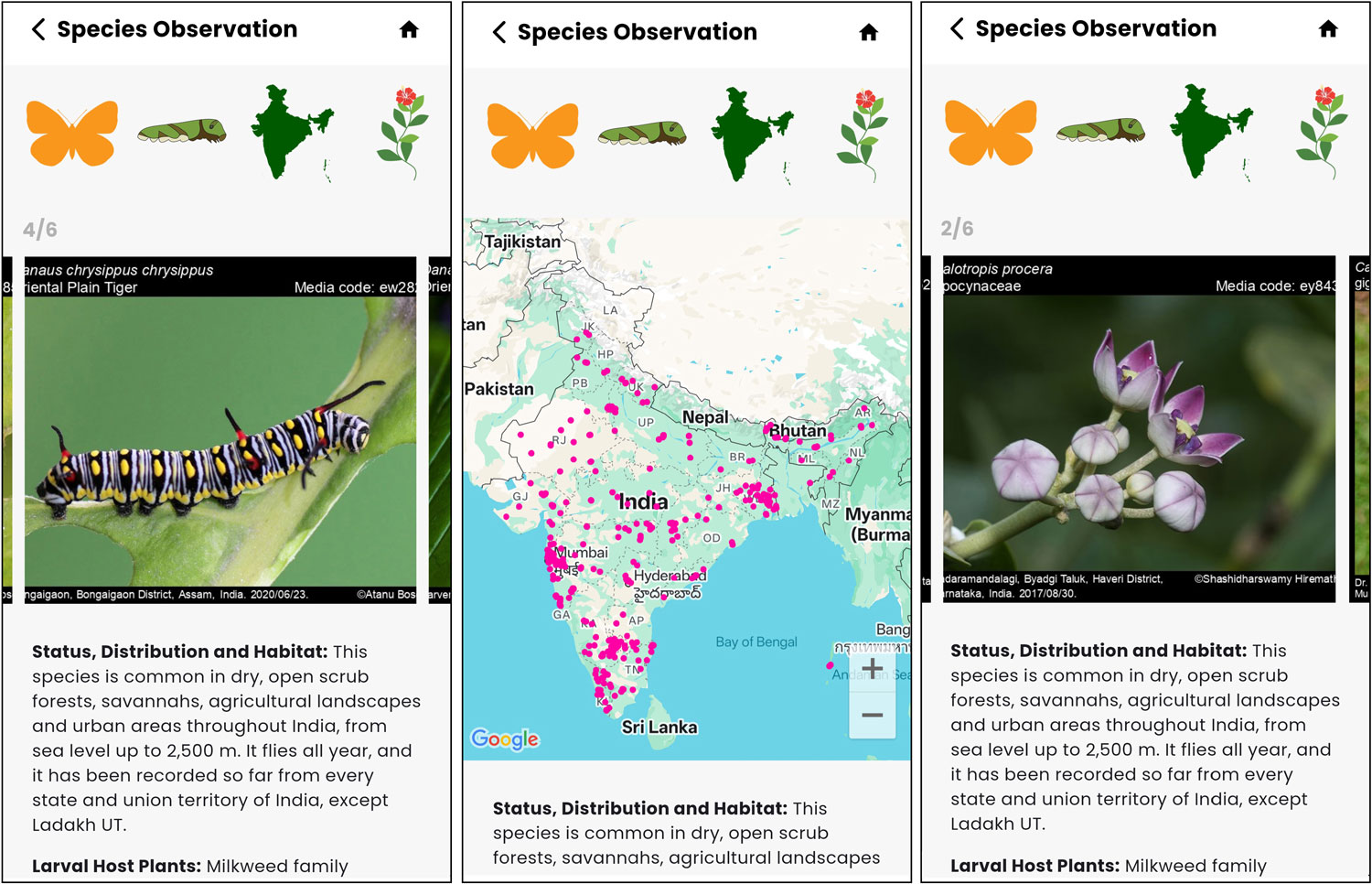
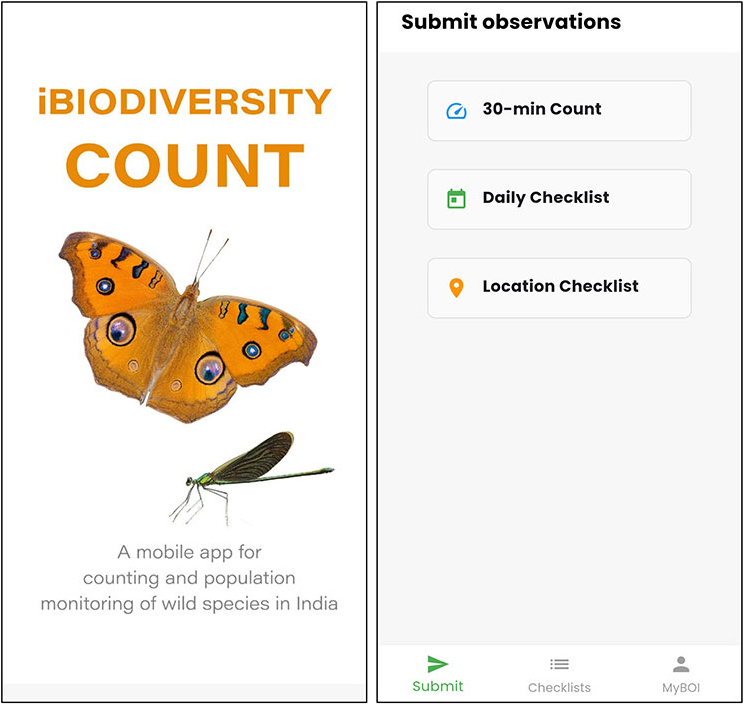
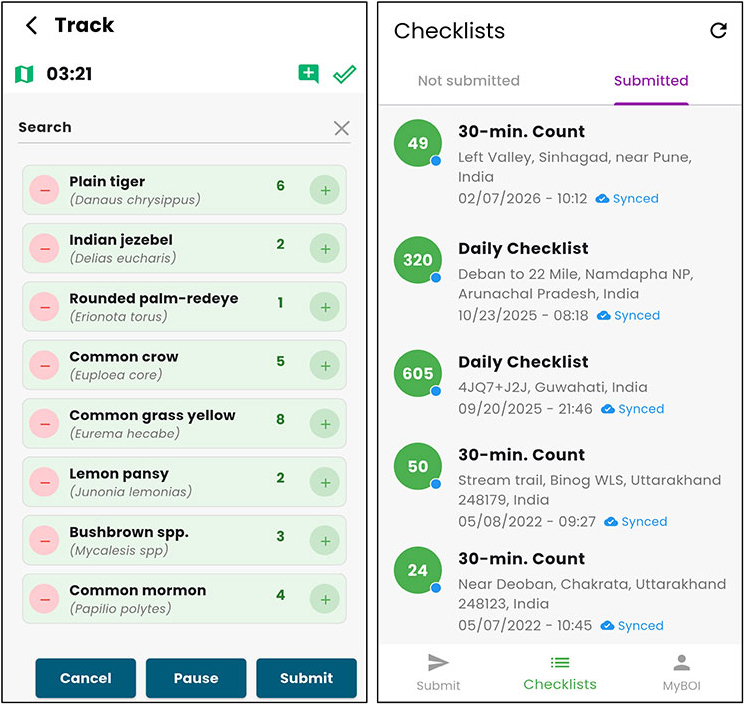
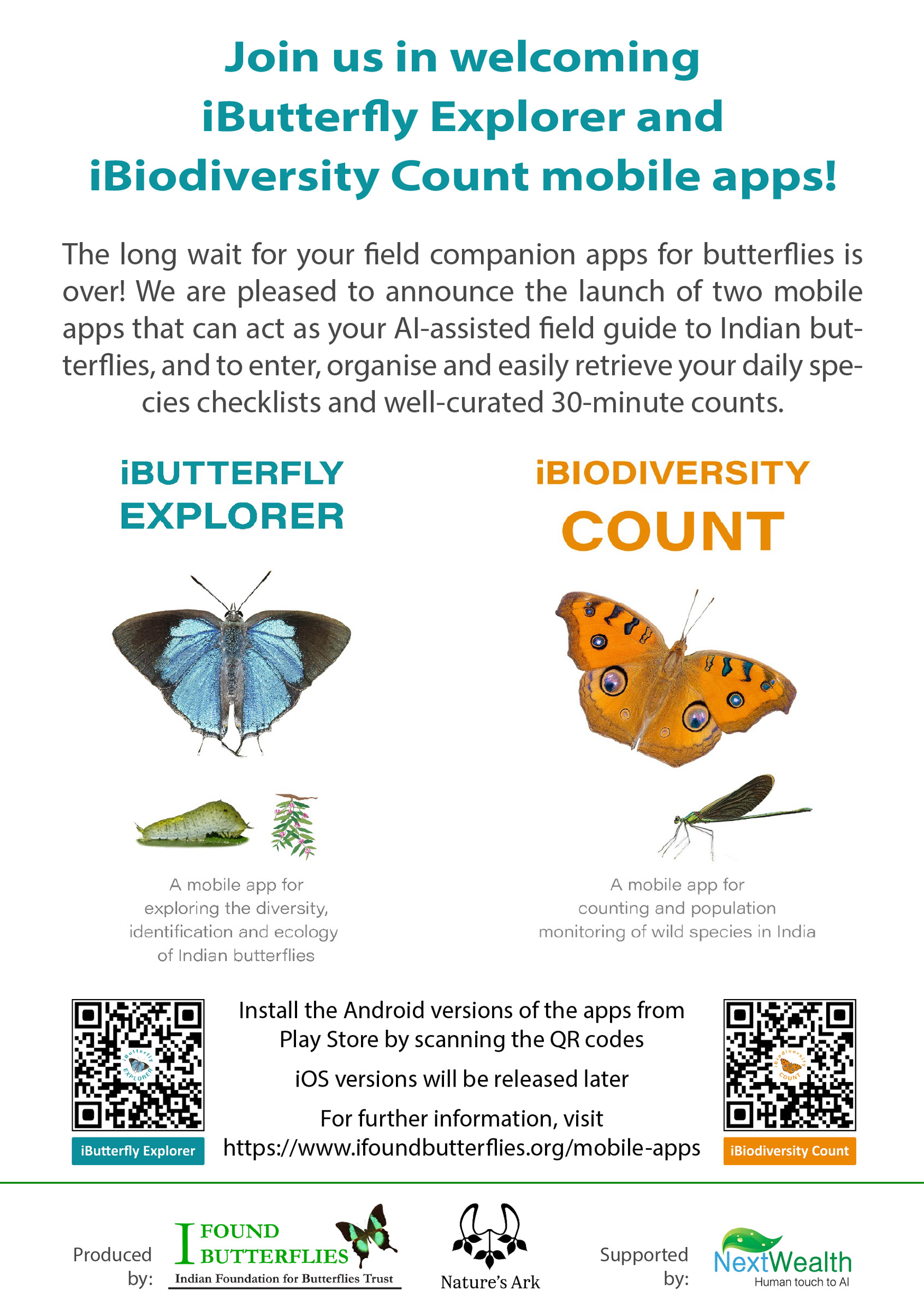
The Biodiversity Atlas – India Field Guides will take advantage of this strong and growing bioinformatics platform, as well as existing expertise of experienced naturalists and biologists in the country, to produce printed and mobile app-based field guides on various taxonomic groups. The taxon-based books and mobile apps will follow standard formats for printed and mobile-based natural history field guides, but they will share a large proportion of the text and images. These complementary media platforms will provide detailed information on the identification, natural history and conservation status of species. They will be richly illustrated with images and summary figures on various aspects of the species biology to assist students and naturalists in the field (see the attached sample). The printed books in this series are inspired by such landmark series as the National Audubon Society Field Guides and the National Geographic Field Guides.
The mobile apps and websites will be closely integrated, with two-way flow of data and features with regular updates. One of the primary goals of these two electronic platforms is to gather user-contributed information into a comprehensive database on specific taxonomic groups. Towards this end, the mobile apps will expand existing data contribution features of the websites so that the app users can contribute data directly from their mobile devices, with or without images. Each of the three media (printed, mobile, and online) may be used independently if the users so wish. However, the cross-media integration will be immensely powerful in the long term to generate new and continuously updated data and information on species in India. Further, the core use of methods and tools of biodiversity informatics will drive rapid growth of biodiversity sciences in India. The associated educational resources will be useful to students and teachers alike.
The writing of the field guides and development of the associated mobile apps and websites will be supported through partnering institutions and extramural funding. The Indian Foundation for Butterflies Trust (this website), which has developed all the existing websites under the Biodiversity Atlas – India platform, will continue to coordinate further development of the websites and mobile apps. The subsequent outreach and citizen science initiatives supported by these printed, mobile and online media platforms may be spearheaded by any partners from educational and research institutions and conservation organizations, based on their geographic reach, interests and mandates. As we have done in the past, we will do our best to develop new features and modules on the mobile apps and websites to facilitate these educational and citizen science projects so that young citizen scientists get trained well, and diverse kinds of data on Indian biodiversity are integrated in ways that can be used efficiently to understand the biology and conservation needs of species. The information generated through the websites and mobile apps will be made publicly available free of cost through the mobile and online platforms. Starting from 2026 and following the publication of the printed field guides and mobile apps, we are committing to launching a nation-wide effort to engage citizen scientists in stepping up efforts to document biodiversity and impacts of climate and other changes on its future in India.
Proposed Structure of the Biodiversity Atlas – India Field Guide Series
Chief Editor: Prof. Krushnamegh Kunte (Associate Professor, National Centre for Biological Sciences (NCBS-TIFR), Bengaluru)
Board of Editors and Reviewers: This is drawn from experienced naturalists who are leading authorities on the natural history and taxonomy of the groups of animals and plants on which they specialize. They are also authors of well-known popular natural history books. Further information is available upon request.
Proposed titles in the series:
Butterflies of India: A Citizen Scientists’ Guide. This book and mobile app are scheduled for release in 2026. A species-based bioinformatics platform, Butterflies of India, that gathers and displays citizen scientist-contributed data has been in operation since 2010. This platform has been driving growth in the natural history and biology of Indian butterflies, resulting in more than 20 research publications. It has contributed significantly to the proposed book and mobile app, with which it will be integrated.
Titles on moths and Odonata (dragonflies and damselflies) will be launched as soon as the field fuide on butterflies is released.