PRESS RELEASES / COMMUNICATIONS
Here is the list of press releases and other communications released by the Indian Foundation for Butterflies Trust:
Here is the list of press releases and other communications released by the Indian Foundation for Butterflies Trust:
A Statement About IFB Trust's Work in the Dibang Valley, Arunachal Pradesh
To Whomsoever It May Concern
In view of what appears to be an unfortunate recent misunderstanding concerning legitimately approved activities of an intern supported by the Indian Foundation for Butterflies Trust (IFBT) in the Dibang Valley of Arunachal Pradesh, and subsequent blacklisting of the said IFBT field team member based on unsubstantiated allegations, IFBT would like to place the following clarification on record:
IFBT has been conducting research, citizen science, educational and outreach activities in Arunachal Pradesh and other states in NE India since 2022. These activities have been conducted with formal research permits from various state forest departments as well as consent and cooperation from local community members, with their full on-ground support.
A young intern associated with IFBT, Mr. Fahim Khan, was a member of the field team working in the Dibang Valley in July 2026. He was named in the research and trekking permits issued by competent authorities of the Arunachal Pradesh forest department. Mr. Fahim Khan was conducting his activities in forest areas, i.e., under the jurisdiction of the Arunachal forest department, under the guidance of a senior, experienced scientist who also had relevant official permits, in accordance with the rules and regulations laid down in the official permits, and with full knowledge of competent forest authorities.
In the communication issued by the Idu Mishmi Cultural and Literary Society (IMCLS; vide Memo No. IMCLS/RERB/2026/August/01, dated 14 August 2026) and in a subsequent news article citing IMCLS (https://arunachaltimes.in/article/imcls-blacklists-4-researchers-for-breaching-community-research-ethics), unspecified and unsubstantiated violations of the Idu Mishmi Community Research Code of Ethics (IMCRE) have been alleged in connection with Mr. Fahim Khan’s field visit to the Dibang Valley.
Based on the research and trekking permits issued by competent forest authorities for the forest areas visited, IFBT firmly rejects the unspecified and unsubstantiated allegations of ethical violations against the IFBT field team member. To the best of IFBT’s knowledge, Mr. Fahim Khan did not undertake any activity in violation of applicable laws, regulations and the permits issued as a member of the IFBT field team, and no evidence to the contrary has been presented to the IFBT.
IFBT further clarifies that as far as known, Mr. Fahim Khan was not engaged in the illegal collection of flora or fauna, damage to the environment, or any other unlawful activity, and he complied with the IFBT’s Code of Conduct, during his visit to the region as a member of the IFBT field team. IFBT has not been presented with any material evidence to the contrary.
IFBT is unaware of any due process followed and evidence presented, evaluated and verified about the alleged but unspecified violations, before the decision to blacklist the IFBT field team member was taken and released to the public by IMCLS. This development is highly unusual in its stark departure from due process.
IFBT remains firmly committed to due process and conducting ethical, responsible and legally compliant research on Indian biodiversity under the permits issued by relevant forest and other authorities, as appropriate, while also respecting the rights, traditions, knowledge systems and concerns of local communities. Over the years, IFBT and its associates/collaborators have undertaken research expeditions aimed at generating and sharing scientific knowledge responsibly. IFBT has also supported community-oriented initiatives, including workshops, guided tours and capacity-building activities in several parts of northeastern and other parts of India. We remain committed to supporting conservation research and conservation action as well as community development while respecting community interests and sovereignty.
IFBT respectfully urges members of the public, viewers and social media users to refrain from circulating or otherwise spreading unverified information, rumours or unsubstantiated allegations concerning IFBT, its trustees, staff, research assistants, research associates, collaborators, and activities. We request that any concerns or questions be taken up and addressed through appropriate official channels and their resolution strictly based on verified facts.
IFBT believes that issues concerning research permissions, research activities and community engagement for conservation research and action are best addressed through transparent paperwork, clear evidence, direct communication, mutual respect, and constructive dialogue. We remain open to engaging with all relevant authorities and stakeholders in the spirit of common goals and cooperation and with the shared objective of ensuring responsible research, conservation, and community development activities, in the country.
Issued on behalf of The Trustees
Indian Foundation for Butterflies Trust
7 September 2026
INDIAN FOUNDATION FOR BUTTERFLIES TRUST
CODE OF CONDUCT
PURPOSE
The purpose of this Code of Conduct is to provide guidelines for ethical behaviour, integrity, and responsibility within the Indian Foundation for Butterflies Trust. This is essential to our mission of scientific research, conservation of biodiversity and the environment, welfare of people, and policy advocacy.
CORE VALUES
2.1. Respect for Nature: Our work is guided by a deep respect for all living beings and the natural ecosystems that sustain life.
2.2. Integrity: We act honestly and ethically in all our interactions, decisions, and actions.
2.3. Transparency: We are committed to open communication, transparency in our operations, and accountability to our donors, funders, and to the people and societies who we serve.
2.4. Inclusivity: We value diversity and ensure that all voices are heard and respected.
2.5. Sustainability: We strive to undertake our activities and projects in an environmentally sustainable manner as much as possible.
ETHICAL CONDUCT
3.1. Compliance with The Law: All activities and operations must be in compliance with the state, national and international laws and regulations applicable in our place of work, including those related to wildlife protection, environmental protection, labour rights, and financial practices and regulations, and to international treaties to which India is a signatory.
3.2. Compliance with Rules, Regulations and Guidelines: All activities and operations must also comply with the formal rules, regulations and guidelines of this Trust.
3.3. Respect for Local Communities: We engage with local communities with respect and without interfering in their customs, traditions, and rights. We work collaboratively to achieve conservation goals that benefit the environment and the people who depend on it.
3.4. Environmental Responsibility: All members must act in a manner that minimizes harm to the environment. This includes avoiding pollution, reducing waste, and promoting sustainable practices in all aspects of our work as much as possible.
3.5. Conflict of Interest: Members must disclose any potential conflicts of interest and avoid situations where personal interests could conflict with the interests of the Trust.
3.6. Confidentiality: All sensitive information regarding the Trust, its projects, funding, unpublished discoveries and manuscripts, and its partners, must be kept confidential, unless, (a) it is already available readily to the public on the Trust website, and (b) a person who has access to such privileged information is specifically authorized in writing by the Managing Trustee to disclose this information to specified third parties.
PROFESSIONAL CONDUCT
4.1. Commitment to Excellence: We strive for excellence in all our endeavours, maintaining high standards of professionalism and accountability in our research activities and research, publication and financial operations.
4.2. Collaboration and Teamwork: Members are expected to work collaboratively, respecting each other’s contributions and fostering a supportive team environment.
4.3. Communication: Open and respectful communication is essential. All members are encouraged to share ideas, provide feedback and suggestions, express alternative views and criticisms, and listen when such views, suggestions and criticisms are expressed.
4.4. Non-Discrimination: Discrimination or harassment based on any grounds, including gender, race, religion, or disability, is not tolerated.
4.5. Stand Against Abuse and Violence: Any kind of abuse and violence, whether physical, sexual, verbal, emotional or mental, has no place in a professional place. All activities and interactions within the Trust and during its operations, whether in the office or in the field, should be conducted professionally with these things in mind.
EMPLOYEE, VOLUNTEER AND ASSOCIATES CONDUCT
5.1. Respect for All: Employees, volunteers, interns, associates and even visitors must be treated with respect, provided with clear guidance, and supported in their roles.
5.2. Training and Development: We are committed to the continuous development of our employees, volunteers, interns, and associates, providing training and learning opportunities to enhance their skills and knowledge. 5.3. Health and Safety: The health and safety of all members, volunteers, and staff are paramount. We ensure a safe working environment and follow best practices to minimize risks. This includes physical, emotional and mental health.
REPORTING AND ACCOUNTABILITY
6.1. Reporting Misconduct: Any member who witnesses or suspects misconduct must report it directly to Trustees or other appropriate authorities within the Trust. All reports will be treated confidentially and investigated promptly, as necessary. Legal matters will be reported to appropriate government authorities.
6.2. Accountability: All members are accountable for their actions, decisions and other conduct. Breaches of this Code of Conduct may result in disciplinary action, up to and including dismissal from the Trust.
COMMITMENT TO THE CODE
By becoming a Trustee, employee, volunteer, intern, or associate of or by working for the Trust, individuals agree to morally and legally abide by this Code of Conduct. It is the responsibility of every member to uphold these standards and contribute to the positive impact of our Trust.
Version 1 issued by The Trustees
Indian Foundation for Butterflies Trust
13 May 2026
Biodiversity Atlas – India Field Guide Series aims to produce modern, authoritative, and multi-platform field guides that are integrated across print, mobile and online media. These Field Guides will assist a budding population of naturalists and citizen scientists in the identification, natural history and biology of species. The overarching goal is to contribute to the growth of biodiversity sciences in India through citizen science initiatives using biodiversity informatics.
India is a land of biodiversity, where watching and photographing animals and plants has now become popular. At the same time, with the rise of citizen science initiatives, amateur naturalists are increasingly interested in generating new publication-quality information on the natural history, species diversity, and biology of many popular groups of organisms, such as butterflies, dragonflies, birds, and plants. In the past decade, amateur naturalists and young scientists have made significant contributions by helping to discover hundreds of new species in India, and contributed to the understanding of distributional ranges, seasonal occurrence and abundance of species by submitting millions of observations to online biodiversity informatics platforms. Massive growth in data generation through citizen science initiatives such as Biodiversity Atlas – India (https://www.bioatlasindia.org), Atlas of Living Australia (https://www.ala.org.au), eBird (https://ebird.org), iNaturalist (https://www.inaturalist.org), and many others shows the tremendous promise of biodiversity informatics through widespread collaborations between professional and amateur citizen scientists.
At the same time, these developments highlight a need to produce modern, authoritative, and integrated multi-platform field guides that can train and assist a growing population of naturalists, citizen scientists and budding professionals in the identification, natural history and biology of species. The proposed Biodiversity Atlas – India Field Guide Series addresses this need. The Field Guides will form an integrated interface between print, mobile and online media, as follows.
The Biodiversity Atlas – India is a collaborative citizen science project (https://www.bioatlasindia.org) in which thousands of individuals from multiple institutions, non-governmental organizations (NGOs) and informal citizen groups are currently involved. It provides a powerful natural history web-platform for species-based bioinformatics. Most data are contributed by amateur citizen scientists, photographers and professional scientists; and the data are peer-reviewed and curated by advanced amateurs and professional biologists. Thus, Biodiversity Atlas – India supports the efforts of integrated professional-amateur scientific communities that aggregate large datasets on Indian biodiversity with the goal of studying ecological trends, especially in the face of climate change and human development. There are currently eight taxon-based websites (i.e., on specific organismal groups): (1) butterflies (est. 2010), (2) moths (est. 2014), (3) dragonflies and damselflies (est. 2014), (4) cicadas (est. 2015), (5) reptiles (est. 2017), (6) amphibians (est. 2017), (7) birds (est. 2017), and (8) mammals (est. 2018) (see further details at https://www.bioatlasindia.org/bai-websites).
The Biodiversity Atlas – India Field Guides will take advantage of this strong and growing bioinformatics platform, as well as existing expertise of experienced naturalists and biologists in the country, to produce printed and mobile app-based field guides on various taxonomic groups. The taxon-based books and mobile apps will follow standard formats for printed and mobile-based natural history field guides, but they will share a large proportion of the text and images. These complementary media platforms will provide detailed information on the identification, natural history and conservation status of species. They will be richly illustrated with images and summary figures on various aspects of the species biology to assist students and naturalists in the field (see the attached sample). The printed books in this series are inspired by such landmark series as the National Audubon Society Field Guides and the National Geographic Field Guides.
The mobile apps and websites will be closely integrated, with two-way flow of data and features with regular updates. One of the primary goals of these two electronic platforms is to gather user-contributed information into a comprehensive database on specific taxonomic groups. Towards this end, the mobile apps will expand existing data contribution features of the websites so that the app users can contribute data directly from their mobile devices, with or without images. Each of the three media (printed, mobile, and online) may be used independently if the users so wish. However, the cross-media integration will be immensely powerful in the long term to generate new and continuously updated data and information on species in India. Further, the core use of methods and tools of biodiversity informatics will drive rapid growth of biodiversity sciences in India. The associated educational resources will be useful to students and teachers alike.
The writing of the field guides and development of the associated mobile apps and websites will be supported through partnering institutions and extramural funding. The Indian Foundation for Butterflies Trust (this website), which has developed all the existing websites under the Biodiversity Atlas – India platform, will continue to coordinate further development of the websites and mobile apps. The subsequent outreach and citizen science initiatives supported by these printed, mobile and online media platforms may be spearheaded by any partners from educational and research institutions and conservation organizations, based on their geographic reach, interests and mandates. As we have done in the past, we will do our best to develop new features and modules on the mobile apps and websites to facilitate these educational and citizen science projects so that young citizen scientists get trained well, and diverse kinds of data on Indian biodiversity are integrated in ways that can be used efficiently to understand the biology and conservation needs of species. The information generated through the websites and mobile apps will be made publicly available free of cost through the mobile and online platforms. Starting from 2026 and following the publication of the printed field guides and mobile apps, we are committing to launching a nation-wide effort to engage citizen scientists in stepping up efforts to document biodiversity and impacts of climate and other changes on its future in India.
Proposed Structure of the Biodiversity Atlas – India Field Guide Series
Chief Editor: Prof. Krushnamegh Kunte (Associate Professor, National Centre for Biological Sciences (NCBS-TIFR), Bengaluru)
Board of Editors and Reviewers: This is drawn from experienced naturalists who are leading authorities on the natural history and taxonomy of the groups of animals and plants on which they specialize. They are also authors of well-known popular natural history books. Further information is available upon request.
Proposed titles in the series:
Butterflies of India: A Citizen Scientists’ Guide. This book and mobile app are scheduled for release in 2026. A species-based bioinformatics platform, Butterflies of India, that gathers and displays citizen scientist-contributed data has been in operation since 2010. This platform has been driving growth in the natural history and biology of Indian butterflies, resulting in more than 20 research publications. It has contributed significantly to the proposed book and mobile app, with which it will be integrated.
Titles on moths and Odonata (dragonflies and damselflies) will be launched as soon as the field fuide on butterflies is released.

Citation of the Brochure:
Kunte, K., Lochana R., Lalrintluanga, and V. Nawge. 2025. Butterflies of Indian Urban Greeneries (brochure). 2nd revised edition. Indian Foundation for Butterflies Trust, Bengaluru, India. 14-page, foldable brochure.
Information about the Brochure:
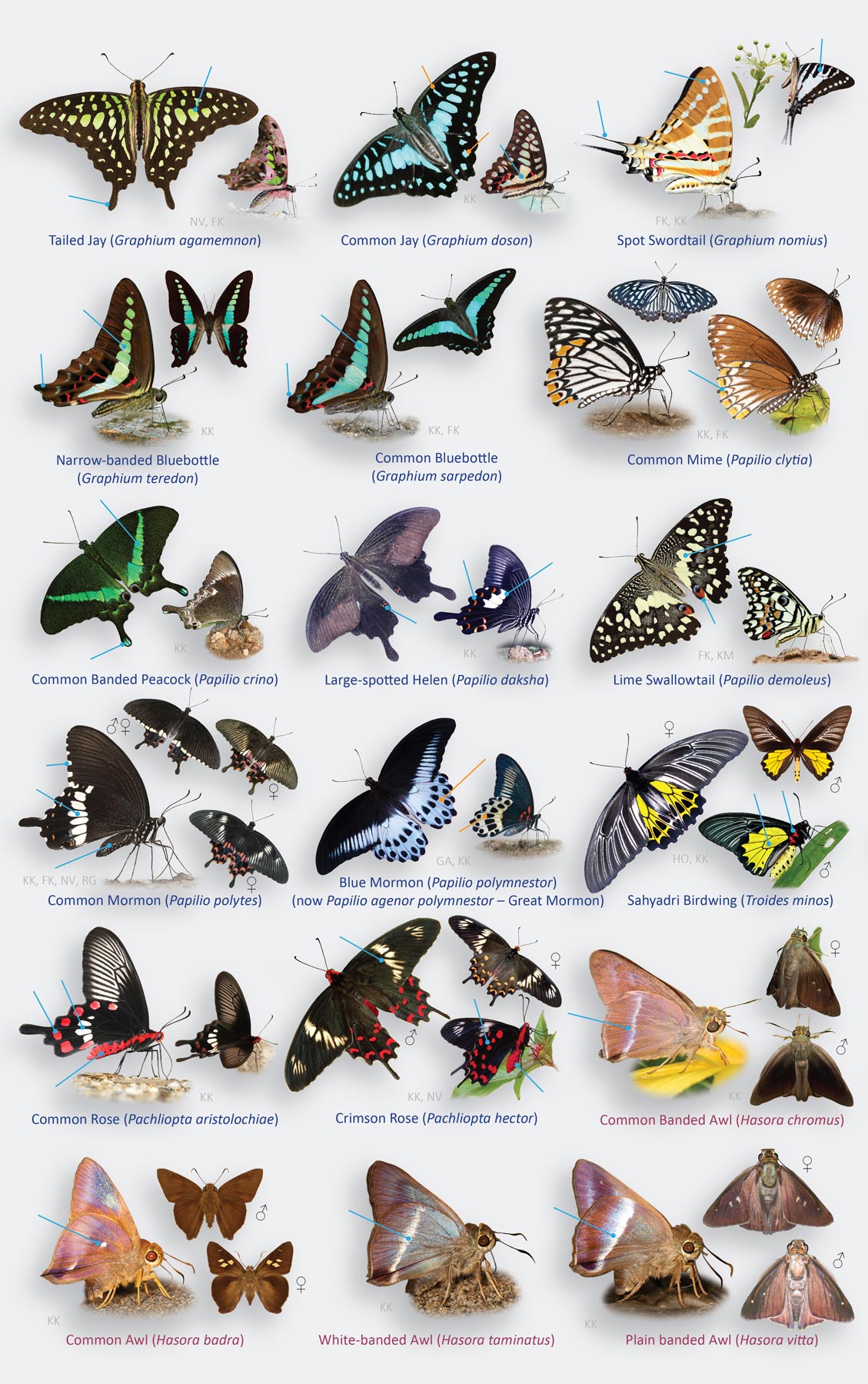
This brochure is a product of an ongoing study of Indian butterflies conducted collaboratively by the Butterflies of India consortium, composed of many research institutions, NGOs and citizen science groups. It is a handy pictorial guide depicting nearly all the butterfly species of urban greeneries across India, except in the truly forested regions. It is aimed at creating awareness and educating citizens, facilitating long-term monitoring of butterfly populations, and aiding conservation efforts by State Forest Departments to protect and improve butterfly habitats and help vulnerable species persist in urban landscapes. The primary focus on well-curated images and pointers to key identification features makes this brochure accessible to beginners, including children, as well as to naturalists, students, teachers, and even urban ecologists.
The brochure is particularly helpful for educational and other outreach activities, long-term butterfly monitoring activities, and great for schools and other educational institutions. It also makes a great gift!
For more information on Indian butterflies, including research, monitoring, and conservation efforts, visit the Butterflies of India (https://www.ifoundbutterflies.org; other pages on this website) and Indian Butterfly Monitoring Scheme websites (https://www.ibms-network.in), download iButterfly Explorer and iBiodiversity Count mobile apps (https://www.ifbt.in/mobile-apps), or contact:
Indian Foundation for Butterflies Trust: Email: secretary@ifoundbutterflies.org. Phone: +91 6362-512-292 (also on WhatsApp).
or
Biodiversity Lab: Dr. Krushnamegh Kunte. Email: krushnamegh@ncbs.res.in. Phone: +91 9483-525-925 (also on WhatsApp).
How to Obtain Copies of the Brochure:
You can obtain copies in person at NCBS (GKVK campus) in the north or JP Nagar in the south of Bengaluru, or receive them by post. The brochure is a not-for-profit resource for the community, it is not produced as a commercial product. However, a contributory amount from those who can afford it is appreciated, since this will help us produce further copies for distribution to underfunded schools, and to create additional resources for butterfly-watchers. A suggested contributory amount to obtain the brochure is Rs. 125 per copy. If you can afford it, then pay more than the suggested contributory amount (see further below). You can pay by bank transfer or a UPI-based app such as PhonePe or PayTM using the details below. Email us a screen capture before you pick up copies or ask them to be shipped (include your postal address). For shipping purposes, an order of a minimum of 10 copies is required, and please include cost of shipping and handling (Rs. 150 for 10-30 copies, Rs. 400 for 31-100 copies).
Information for Bank Transfer:
Account name: Indian Foundation for Butterflies Trust
Bank details: State Bank of India, Amruthahalli Branch, Bengaluru 560092. Ac. No.: 40332965419. IFSC Code: SBIN0011821.
UPI ID: 6362512292@SBI
QR code for payment through UPI-based apps:

Sponsor This Brochure for Underfunded Schools and Budding Naturalists: All contributory funds from this brochure will go to distributing free copies to underfunded schools and to students who cannot pay, to creating new outreach and educational materials on biodiversity and conservation, and for other non-profit goals and projects. If you want to sponsor additional copies for distribution to underfunded schools and students, then please get in touch. If you want to sponsor printing of customised copies that may be distributed to a group of people you especially care about (e.g., a school, NGO, society, company, or state forest departments), then that can be arranged, too.
We would like to translate this brochure into Hindi and other regional languages and make the information about butterflies as widely accessible to as many native speakers as possible. If you can help us in this effort, then please contact us. Residents of Bengaluru or those who can visit NCBS for this work are preferred.
A MOBILE APP FOR AI-ASSISTED SPECIES IDENTIFICATION AND NATURAL HISTORY OF INDIAN BUTTERFLIES
YOU CAN DOWNLOAD THE APP FOR ANDROID PHONES FROM THE GOOGLE PLAY STORE, HERE
The iOS version will be made available on Apple App Store in due course of time.
Read about the associated iBiodiversity Count mobile app.
SEE THE FAQs FOR THE APPS HERE
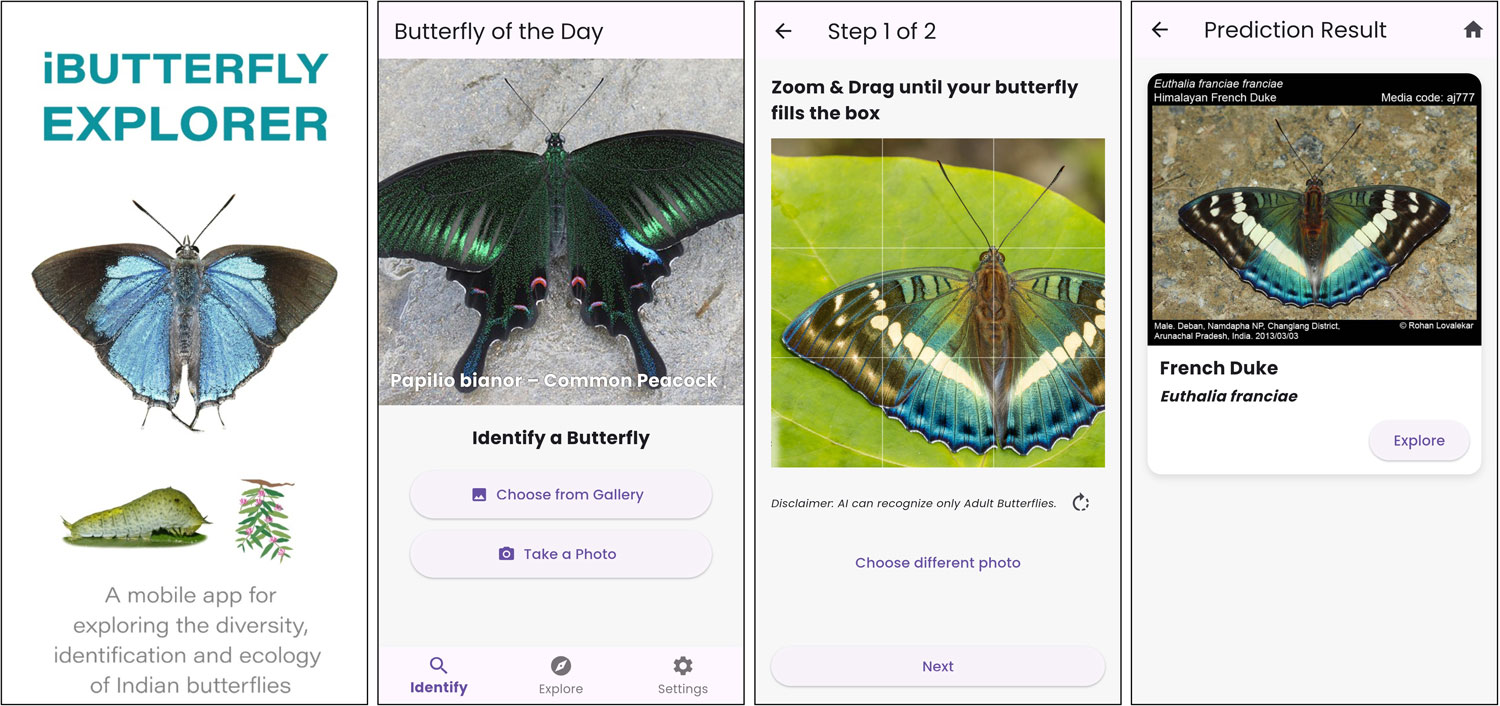
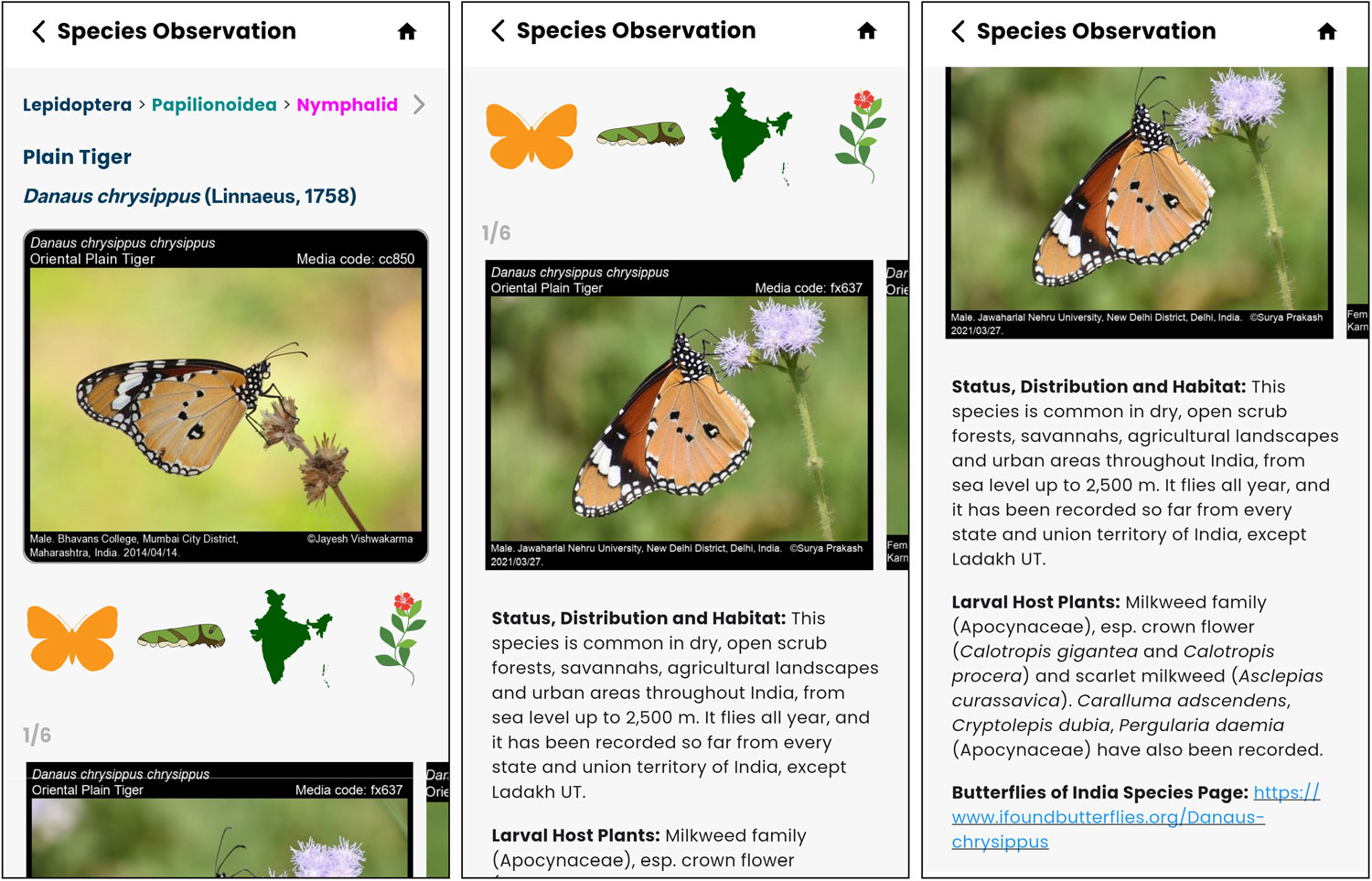
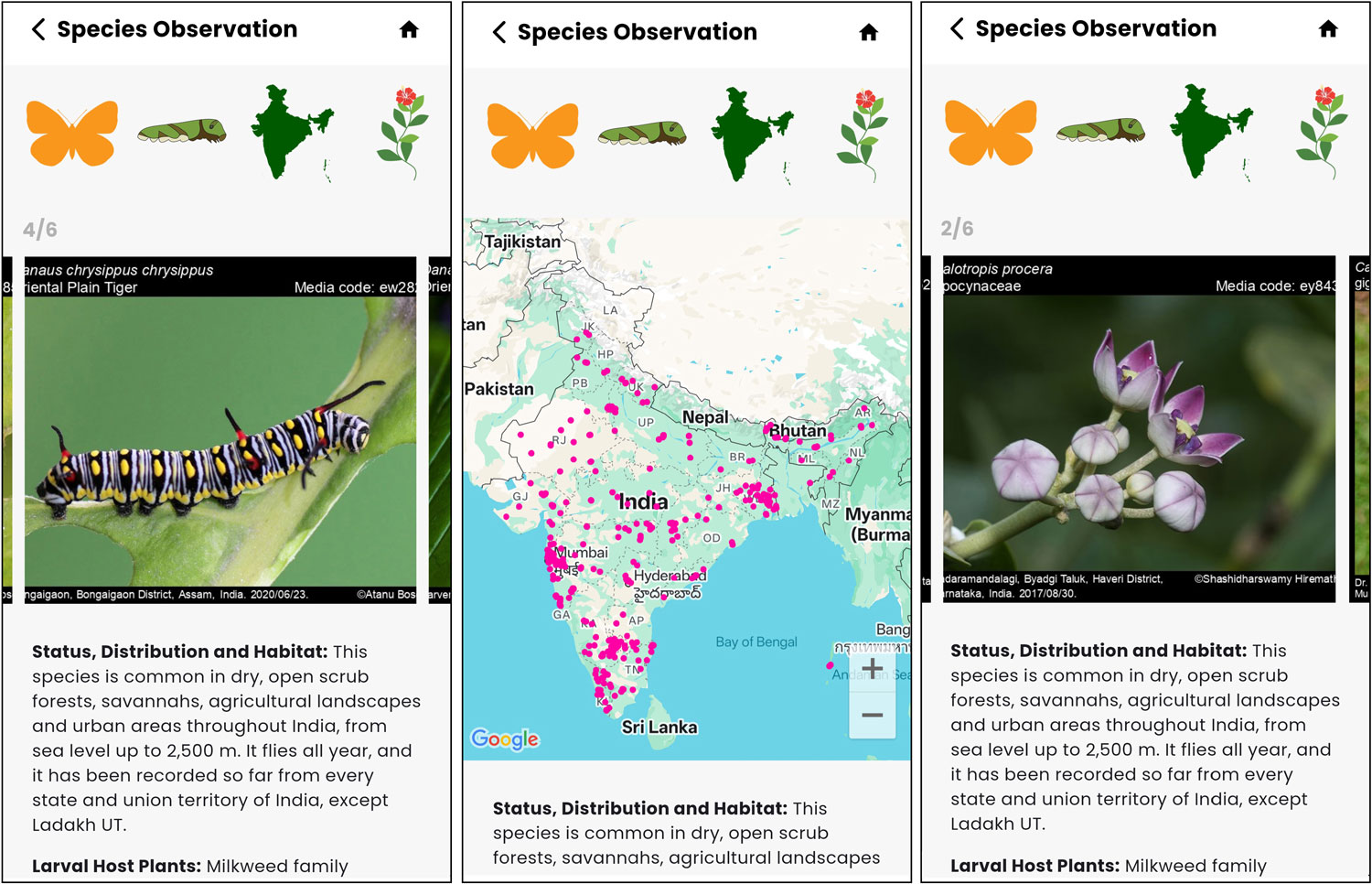
The iButterfly Explorer mobile app will help take your enjoyment of watching Indian butterflies in the field to the next level. It is an authoritative field guide for species identification and natural history of Indian butterflies. The app offers AI-assisted species identification, and serves as a mobile-friendly, offline companion to the Butterflies of India website, from which it draws data.
The project is driven by an integrated professional-amateur scientific community that aggregates big data on Indian butterflies with the goals of: (a) providing helpful resources and guidance to watch and enjoy butterflies, and (b) studying ecological trends. The platform is also used extensively for educational and outreach activities, so it promotes the enjoyment, research and conservation of biodiversity.
It is a home-grown citizen science platform, custom-made for Indian biodiversity, hosted in a leading national research institution, and supported by a consortium of non-profit agencies and/or non-profit engagements.
Prominent Features:
Easy-to-use, richly illustrated mobile app for field identification of species, aided by a rich array of peer-reviewed reference images
Easy-to-use, highly accurate AI-assisted identification of species using your photographs
Online as well as offline functionality, facilitating use in urban greeneries and remote field locations alike
Useful for everyone, from nature lovers and naturalists to citizen scientists and field researchers
It is completely free. It has no inbuilt ads, and your data and personal information will not be sold or shared with any other platform or company for a for-profit or non-profit purposes.
Read the associated full statements on data privacy and data sharing /data-privacy at the linked pages.
The app was produced as a collaborative effort between the Indian Foundation for Butterflies Trust, Nature's Ark and NextWealth Entrepreneurs Pvt. Ltd., first released in December 2025.